Plan your visit
Victoria Falls
When the Falls are at their fullest, how to get there and across the border, and how to enjoy the rainforest safely.
Last updated October 2026
When to visit
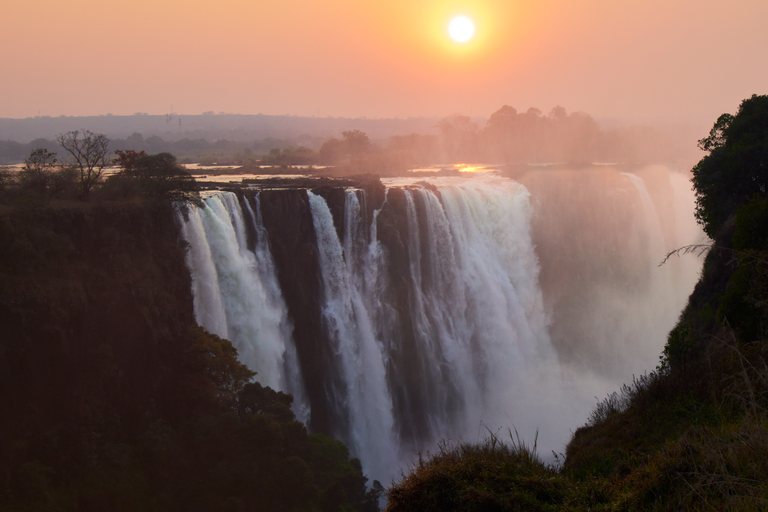
Victoria Falls is worth visiting all year, but the experience changes with the Zambezi. UNESCO describes the Falls as the largest curtain of falling water in the world, 1,708 m wide, with up to 500 million litres a minute going over at peak flow. How much of that you see depends on the month.
- High water, about February to May. After the rains the river is fullest and the Falls thunder. The spray plume can rise about 500 m and is visible from up to 50 km away on the Bulawayo road, but on the paths it can be so heavy that it hides the view and soaks you.
- Falling water, about June to August. The flow is still strong and the spray thins, so views across the gorge are usually clearer. These are the cooler, dry months, with warm days and cold nights.
- Low water, about September to December. The river is at its lowest by October and November and the Zimbabwe side keeps more water than the Zambian side. It is the hottest time of year until the rains break.
Zimbabwe Parks suggests cool, comfortable clothing, sunhats and sunscreen from September to March, and warm clothing for evenings from April to August. Rain usually falls from about November to March, often as afternoon storms. Activities that depend on river levels, such as rafting runs and swimming at the lip of the Falls on the Zambian side, change through the year, so ask operators what is running when you travel.
Getting there and around
Victoria Falls International Airport receives international flights as well as domestic flights from Harare and Bulawayo, so many visitors fly straight in. By road, the A8 runs from Bulawayo directly to Victoria Falls. Most hotels and lodges arrange airport transfers.
The town is small and sits right beside the Falls: Victoria Falls National Park is bounded by the river on one side and the town on the other. The main entrance to the rainforest and viewpoints is within reach of central hotels, but distances to lodges upriver are longer, so confirm transfers and activity pick-ups with your accommodation or operator.
- Into Zambia. The Victoria Falls Bridge border crossing leads to Livingstone and the Zambian side of the Falls, which has its own national park and viewpoints.
- The KAZA UniVisa. UK travel advice says the KAZA UniVisa costs US$50, lasts 30 days, and covers travel between Zimbabwe and Zambia plus day trips into Botswana. It is issued at Victoria Falls airport and at the Victoria Falls and Kazungula land borders. Requirements depend on your nationality, so check before you travel.
- Into Botswana. The Kazungula border with Botswana, the gateway to Chobe, is about an hour's drive away.
Safety and access
The rainforest trail follows the edge of the gorge opposite the Falls, with a series of viewpoints. Zimbabwe Parks warns visitors to keep away from the cliff edge and to take care on rocks that can be slippery with spray. Stay on the marked paths, which also protect a fragile forest that depends on the spray.
- Come prepared for spray. In the high-water months, bring a raincoat or hire one, and a waterproof bag for phones and cameras.
- Wildlife in and around town. Baboons, warthogs and monkeys are common in the park. Keep food out of sight, and do not walk along the river or in unfenced areas after dark.
- Activities. Book rafting, bungee jumps, flights and river trips with licensed operators, and make sure your travel insurance covers each activity.
- Malaria. The Falls lie at about 915 m. TravelHealthPro says malaria risk is high below 1,200 m from November to June, and present all year in the Zambezi valley. Ask a travel clinic about antimalarials and use insect repellent in the evenings.
- Park admission. Entry fees and opening hours for the rainforest are set by Zimbabwe Parks and change from time to time, so confirm them before you go and carry US dollars in small notes.