Plan your visit
Harare
The seasons in the capital, getting in and around, day trips to granite hills and rock art, and staying safe in the city.
Last updated October 2026
When to visit
Harare can be visited all year, and its high altitude keeps the climate mild.
- Cool, dry months, about May to August. Sunny days and chilly mornings and evenings. Pack a warm layer.
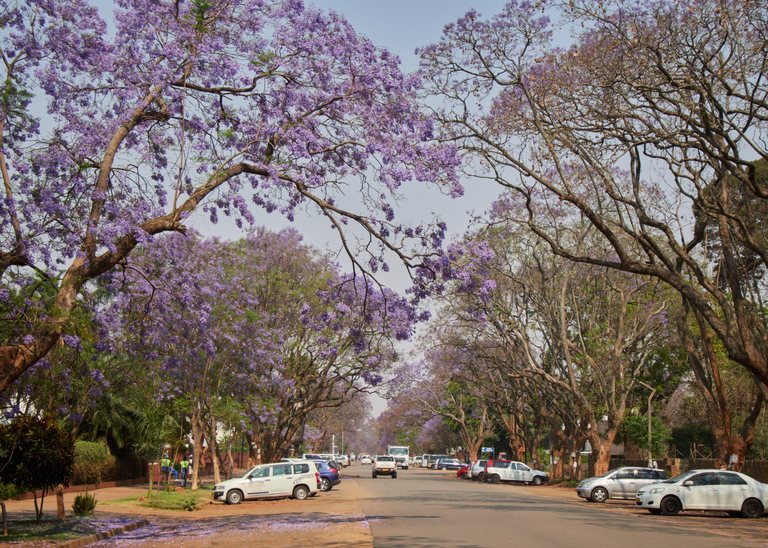
- Jacaranda season, about September to October. Warm and dry, when the city's jacaranda-lined avenues are in purple bloom.
- Rainy season, about November to March. Warm days with afternoon thunderstorms. The city and its surroundings turn green.
Museums, galleries and monuments keep their own opening days, and some close on public holidays, so check before you plan your time. TravelHealthPro rates the malaria risk in Harare as very low, so antimalarials are not usually advised for the city itself.
Getting there and around
Harare's international airport is the country's main air gateway, with regional and international flights and domestic flights to Bulawayo and Victoria Falls. The city is also the hub of the main road network, with routes to Mutare and the Eastern Highlands, Masvingo and Great Zimbabwe, Bulawayo, and north to Kariba and Mana Pools.
- Getting around town. The city is spread out and walking between suburbs is not practical. UK travel advice says taxis recommended by hotels are usually reliable and in good condition.
- Kombis. UK travel advice describes commuter minibuses as often overcrowded, poorly maintained, uninsured and recklessly driven, and suggests avoiding them where possible.
- Driving. Expect police roadblocks and toll gates on the highways: stop when asked and get a receipt for any fine. Traffic lights may stop working during power cuts.
Day trips
Granite hills and heritage sites managed by National Museums and Monuments of Zimbabwe (NMMZ) lie within easy reach of the city.
- Domboshava. About 30 km north of Harare, a granite hill with rock paintings, walking trails, a stream and pools. NMMZ says it is a venerated rain-making ceremony site, with picnic and camping facilities.
- Chiremba Balancing Rocks. About 13 km south-east of the city in Epworth, declared a national monument in 1994. The balancing rocks have appeared on the country's banknotes.
- Museums and galleries in town. The National Gallery of Zimbabwe opened in 1957 and has been central to the growth of contemporary art in the country. The Zimbabwe Museum of Human Sciences in the Civic Centre focuses on archaeology, history and rock art.
NMMZ says custodians are available to give guided tours at major sites such as Domboshava, Chiremba and Ngomakurira.
Safety and access
Most visits to Harare are trouble-free, but take the usual city precautions. UK travel advice says:
- Street crime. Mugging, pickpocketing and bag-snatching are common in city centres, especially after dark. Keep valuables out of sight and take a taxi at night.
- Cash machines. Be vigilant when leaving banks and cash machines, and do not carry or show large amounts of cash.
- In the car. Smash-and-grab robberies have been reported on Liberation Legacy Way (Borrowdale Road) and Churchill Road. Keep doors locked and windows closed.
- Photography. Do not photograph government buildings, police, soldiers or protests. Roads around State House are closed from 6pm to 6am.
- Demonstrations. Avoid political gatherings and rallies, which can be unpredictable.
- Power cuts. Blackouts are frequent, so carry a torch or headlamp.