Plan your visit
Great Zimbabwe
Where the monument is, how to explore the Hill Complex, Great Enclosure and museum, and how to respect a sacred site.
Last updated October 2026
Where it is
Great Zimbabwe National Monument lies in south-central Zimbabwe, about 27 km south-east of Masvingo town, according to National Museums and Monuments of Zimbabwe (NMMZ), which manages the site. It stands at about 1,100 m above sea level. The Hill Complex rises some 80 m above the surrounding land and can be seen from about 10 km away as you approach.
- Getting there. Masvingo is the nearest town and the usual base. From there, the monument is a short drive; arrange a transfer, a tour or a hire car before you set off.
- When to visit. The site is open to visitors all year. The cooler, dry months, about May to August, are the most comfortable for walking between the ruins. From September the days are hot, so start early and carry water.
- Malaria. TravelHealthPro says malaria risk in Zimbabwe is high below 1,200 m from November to June. Ask a travel clinic for advice on this area and use repellent in the evenings.
Lake Mutirikwi lies close by, and NMMZ manages other stone-walled sites in the region, such as Majiri, about 50 km south-east of the monument.
How to experience it
UNESCO describes Great Zimbabwe as a unique testimony to the Shona civilisation between the 11th and 15th centuries. NMMZ dates the city's height to about 1290 to 1450 AD and calls it the largest pre-colonial settlement in southern Africa, and the largest of more than 300 Zimbabwe-type sites in the region. Allow at least half a day, and more if you want to take it slowly.
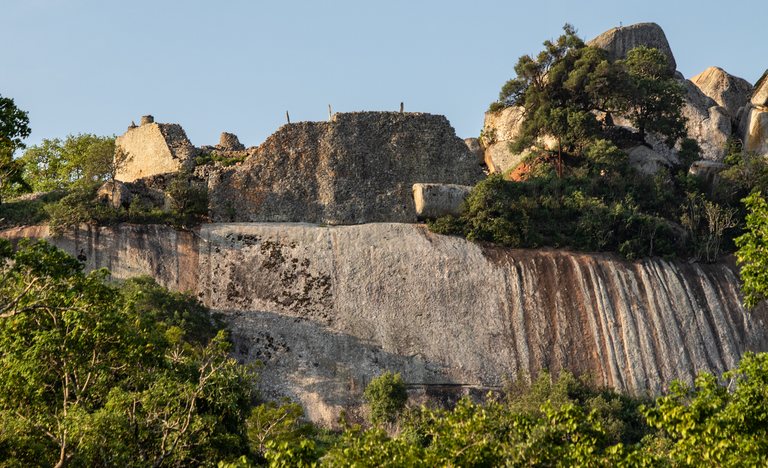
- The Hill Complex. Stone walls woven around natural granite boulders form a series of enclosures on the hilltop. The climb is steep, so wear good shoes, carry water and go early or late in the day.
- The Great Enclosure. NMMZ describes it as the largest stone structure in southern Africa: an oval girdle wall about 250 m long, up to 10 m high and 6 m thick, built without mortar and enclosing a conical tower about 10 m high.
- The Valley Ruins. Smaller walled enclosures between the hill and the Great Enclosure show how the building style developed and where people lived.
- The site museum. NMMZ says all but one of the famous carved soapstone Zimbabwe Birds are on display here, alongside gold beads, pottery, iron tools and trade goods such as glass beads. The bird is the national emblem, on Zimbabwe's flag and coat of arms.
- Guides. NMMZ runs guided tours and educational visits. A guide helps you make sense of how the city was organised, which is hard to read from the walls alone.
Heritage protection
Great Zimbabwe has been legally protected since 1893 and became a UNESCO World Heritage Site in 1986. It is also a living sacred place: UNESCO notes that contemporary communities still use it for spiritual purposes.
- Do not climb on the walls. The dry-stone walls have no mortar, and NMMZ monitors and restores sections that are moving or have collapsed. Stay on paths and use the marked routes.
- Respect sacred spaces and rituals. Follow guidance from site staff and guides about places that are closed or used for ceremonies.
- Leave everything in place. Removing stones, artefacts or plants from a national monument is against the law.
- Check the rules before you go. Confirm current opening hours, entry fees, guide arrangements and any photography rules with NMMZ.